
4 2026 opened with a split market. Upstream bulk materials such as TiO2 pulled back, but midstream synthetics — styrene, general solvents, modified asphalt — moved up across the board, pushing manufacturing costs higher still. These coating raw material market trends matter well beyond the factory gate for overseas B2B buyers. Dangerous goods (DG) freight, especially on Middle East routes, port congestion and geopolitical risk are all testing supply chain resilience. With winter approaching and the construction peak behind us, planning Q1 2027 procurement is now the priority for global importers.
Procurement Cost Overview: Indexes Up Across the Board, Waterproofing Hit Hardest
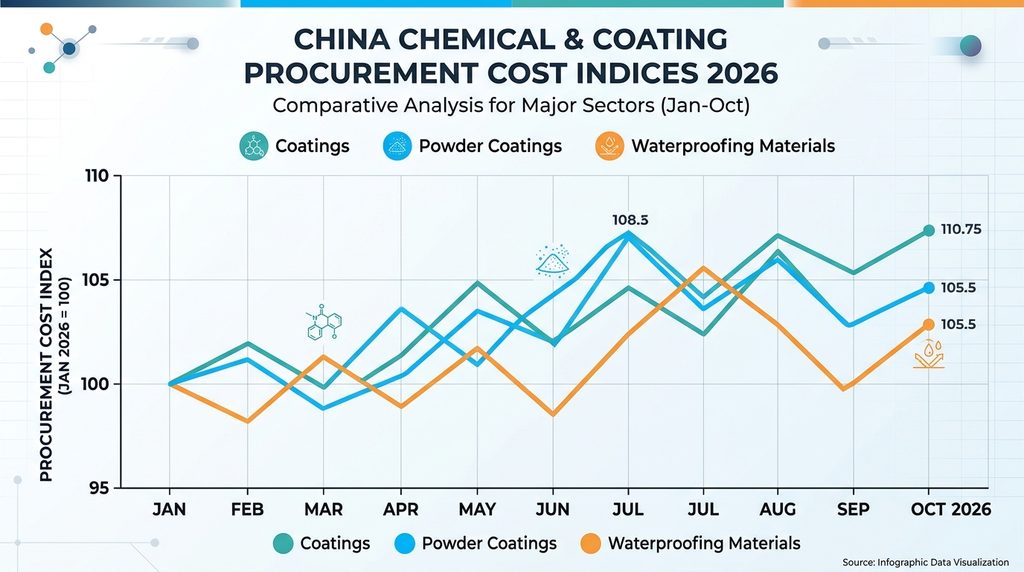
October data shows cost pressure intensifying in every major segment:
- Coating Procurement Cost Index: 100%, up 4 points MoM and 26 points YoY.
- Powder Coating Cost Index: 93%, up 2 points MoM and 15 points YoY.
- Waterproofing Material Cost Index: 129%, up 4 points MoM and 39 points YoY — the sharpest margin squeeze waterproofing manufacturers have seen in years.
2. Sector Breakdown: Where the Cost Pressure Is Coming From
Waterborne and solvent-based systems: emulsions and solvents surge
The latest acrylic emulsion price update points to a clear upstream-driven squeeze. Styrene averaged 10.72% higher in October, lifting styrene-acrylic emulsions (+8.56%) and pure acrylic emulsions (+6.21%) and putting real pressure on waterborne manufacturers.
Solvent-based systems fared no better. General solvents rallied almost across the board: 200# solvent oil led with +11.46%, followed by xylenes (+6.78%), isopropyl alcohol (+8.38%) and the acetate solvents. Industrial paints, thinners and related coatings all got more expensive to produce — a chemical raw material price trend that now runs through nearly every solvent-based formulation.
Titanium dioxide and epoxy resins: divergent trends
TiO2 was a case of falling feedstock costs and flat finished prices. Solid sulfur (-15.96%) and sulfuric acid fell sharply, but terminal coating makers kept buying hand-to-mouth, so the upstream savings never reached finished TiO2 prices. Prices stayed in sideways consolidation through the second half of the month.
Epoxy resins split by application. Liquid epoxy (E-51), used mainly in industrial anti-corrosion and flooring, slipped 0.76% as peak season ended. Solid epoxy (E-12) for powder coatings edged up 1.89% on steady downstream restocking.
Waterproofing materials: peak season lifts modified asphalt
Waterproofing raw material prices climbed to yearly highs on the autumn construction peak. Modified asphalt jumped 8.29% in a month and PP (T30S) auxiliaries rose nearly 10% (+9.84%), pushing membrane and coating costs up with them.
3. Beyond Material Costs: Freight and DG Shipping Risks
For overseas buyers — particularly in the Middle East and Mediterranean — logistics can be a bigger headache than raw material volatility.
Middle East freight rates and capacity. Additives, resins and solvents often fall under DG classification, which means strict handling requirements. A 20GP from major Chinese ports to Jebel Ali is still around $10,000, a serious hit to buyer margins.
Carrier updates. According to logistics partners, MSC and other major carriers began gradually resuming DG bookings in late October, with transit times to destination ports settling at around one month.
Geopolitical risk. Developments in the Middle East and intermittent Red Sea disruptions still carry a high risk of delays, rolled cargo and surprise surcharges. On high-risk routes, the sensible move is to stay cautious rather than panic-book at peak freight rates.
4. Outlook and Q1 2027 Procurement Advice
Winter is slowing construction across most of the Northern and Southern Hemispheres, and the traditional peak season for coatings and waterproofing is officially over. Downstream resistance to high raw material prices should grow from here. As domestic petrochemical maintenance wraps up and spot supply recovers, recent sharp gainers such as styrene and general solvents look likely to correct downward for a period.
Two practical suggestions for global buyers:
- Avoid peak buying; work down inventory. Use the winter slowdown to audit and consume existing stock instead of making large purchases at current highs.
- Plan Q1 2027 in reverse. DG shipping approvals are complex and transit is long — allow 30 to 45 days for shipping and customs. Importers should finalize project forecasts and cost estimates between November and early December, so production and shipping schedules are locked in well before the Lunar New Year.
Our Core Solutions for Coating Manufacturers
- One-stop Raw Material Supply: We offer a complete portfolio of resins, hardeners, additives, and pigments to streamline your supply chain and reduce operational risks.
- Formulation & Local Production Expertise: Backed by deep R&D and manufacturing experience, we provide proven formulations and practical on-site guidance to help you achieve stable, independent production.
- Tailored Technical Support: Share your target paint type, and we will deliver customized technical data sheets to support your product expansion and formulation optimization goals.