
Understanding Haze in Paint and Coating Production
Coating haze is often described as a milky or cloudy appearance that reduces the clarity of a high-gloss finish. Unlike standard low gloss, haze is caused by micro-structures or suspended particles that scatter reflected light. Identifying whether it is reflection haze or transmission haze is the first step in troubleshooting your production line.
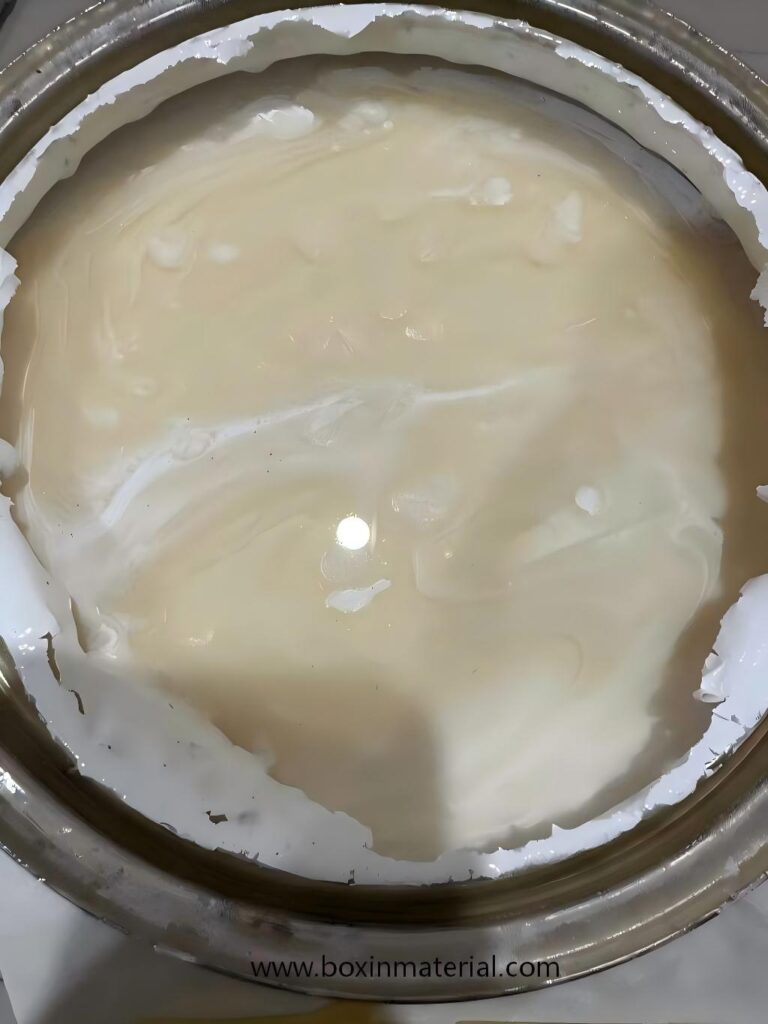
Common Causes of Haze: Solvent Mismatch and Moisture
A primary cause of turbidity in coatings is improper solvent selection. When the solubility parameters of the thinner do not match the film-forming material, partial resin precipitation occurs, leading to haze. Furthermore, moisture in solvents or high-humidity environments can trigger additive precipitation, a common issue for factories during the manufacturing process.
Professional Solutions to Eliminate Haze and Turbidity
To solve haze problems, manufacturers should first address solvent compatibility by adjusting the aromatic content or checking the refractive index of the system components. Removing moisture and ensuring the stability of the emulsion paint formulation are essential preventive measures. For advanced systems, using stabilizers like AMP-95 can significantly reduce the risk of future turbidity.
Low gloss is the overall reduction of reflected light across the surface. Haze, however, is the scattering of light near the specular reflection angle, creating a “milky” or “foggy” appearance even if the surface feels smooth and shiny.
First, verify the moisture content of your raw materials. Then, adjust the solvent blend by increasing the ratio of true solvents (like aromatics) to prevent resin precipitation. Using a high-performance dispersant can also help maintain particle stability and prevent reflection haze.
Yes. In waterborne systems, high humidity slows down water evaporation, which can lead to incomplete film formation or the entrapment of tiny water droplets, resulting in transmission haze or turbidity.
This is often due to the flocculation of pigments or the slow precipitation of incompatible additives. Ensuring a stable emulsion paint formulation and using multifunctional additives like AMP-95 for pH control and stabilization can prevent storage-induced haze.
What We Offer
If you are a paint or ink manufacturer facing haze or stability issues, we offer:
- Custom formulation design – improve compatibility and performance.
- Raw material supply – complete resin, additive, and solvent solutions.
- Process guidance – technical support from lab scale to production.