
Introduction: What is Barium Sulfate Used for in the Paint Industry?
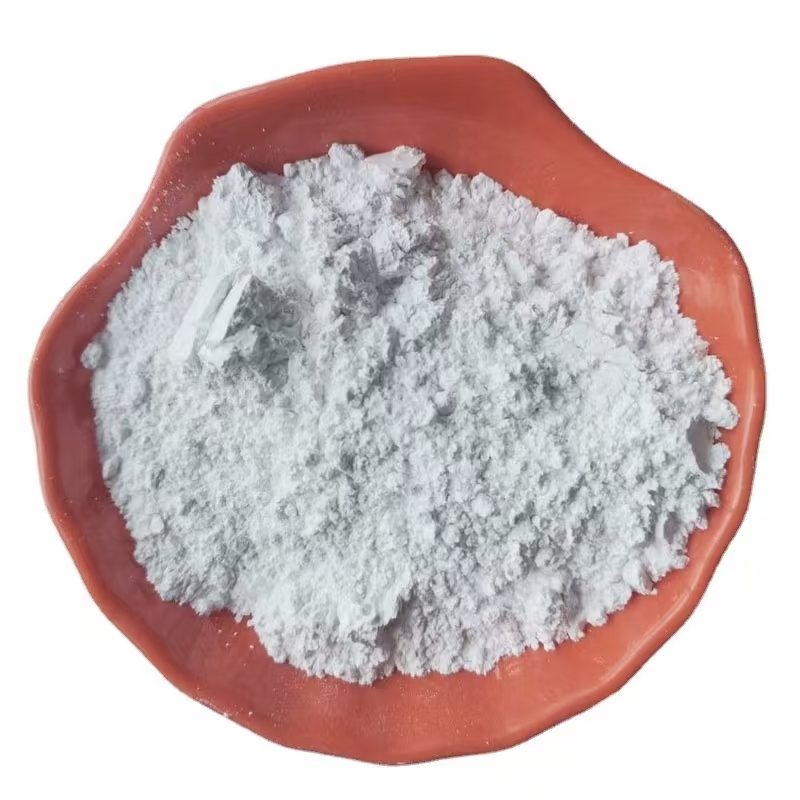
When compounding modern coatings, researchers often ask: what does barium sulfate do to improve film properties? As a premier functional filler for paint, its role extends far beyond simple volume padding.
Specifically, barium sulfate paint formulations leverage a high specific gravity of 4.45 and an exceptionally low oil absorption value (<5%). Making it indispensable for high-solid, low-VOC applications.
The Core Mechanisms: Optical Regulation and TiO2 Synergy
To truly answer what is barium sulfate used for, manufacturers must look at the macro and micro-level interactions within the resin matrix:
- Titanium Dioxide Substitution : Barium sulfate particles can strategically nestle into the micro-voids between titanium dioxide particles. This spacing effect optimizes light scattering.It lets formulators replace 10%–20% of costly TiO2. Cutting comprehensive formulation costs by up to 15% while improving hiding power.
- High-Temperature Performance: With a melting point reaching 1580°C, it outperforms standard calcium carbonate or aluminum hydroxide, making it one of the most reliable powder coating additives for high-temperature curing environments.
Mechanical Engineering and Chemical Stability
Beyond optical tuning, integrating this mineral into your resin design alters the physical resilience of the cured film:
- Hardness & Anti-Scratch: Possessing a Mohs hardness of 3-3.5, it reinforces the resin matrix, significantly raising surface scratch resistance.
- Inert Chemical Resistance: It is completely insoluble in water and completely inert to acids, alkalis, light, and heat, successfully extending the overall service life of heavy-duty anti-corrosive coatings.
Optimization via Particle Size and Surface Modification
Maximizing the potential of a barium sulfate paint depends heavily on particle classification and chemical modification techniques:
- Particle Size Selection : Ultrafine grades (<0.1μm) are critical for low-haze, high-gloss applications, while coarser grades (>0.5μm) serve perfectly as texturing and weight-increasing fillers.
- Advanced Modification Methods: 1.Silane Coupling (KH-550): Improves cross-linking density at the interface to prevent coating delamination. 2.Stearic Acid Treatment: Converts the particle surface from hydrophilic to hydrophobic, dramatically boosting dispersion efficiency in lipophilic polyester or epoxy resins.
FAQ: Solving Formulation Challenges
It creates a dual-network structure. Barium sulfate forms a rigid skeleton, while carbon black establishes a conductive network. This synergy is widely used to develop anti-static industrial coatings without sacrificing hardness.
Yes, raw grades with a high specific gravity can settle quickly. To maintain proper in-can stability of coatings, formulators should select surface-modified (hydrophilic or hydrophobic) barium sulfate paired with appropriate rheology modifiers.
Our Core Solutions for Coating Manufacturers
- One-stop Raw Material Supply: We offer a complete portfolio of resins, hardeners, additives, and pigments to streamline your supply chain and reduce operational risks.
- Formulation & Local Production Expertise: Backed by deep R&D and manufacturing experience, we provide proven formulations and practical on-site guidance to help you achieve stable, independent production.
- Tailored Technical Support: Share your target paint type, and we will deliver customized technical data sheets to support your product expansion and formulation optimization goals.