
What is Industrial Epoxy Floor Coating?
Industrial epoxy floor coating is a high-strength, wear-resistant, and aesthetically versatile surfacing material. Engineered as a two-component system consisting of epoxy resin and specialized hardeners, it creates a dense, protective shield through a controlled chemical cross-linking process.
For manufacturers, it represents a standard for durability in heavy-traffic environments such as underground garages, food-grade cleanrooms, and high-tech electronic workshops.
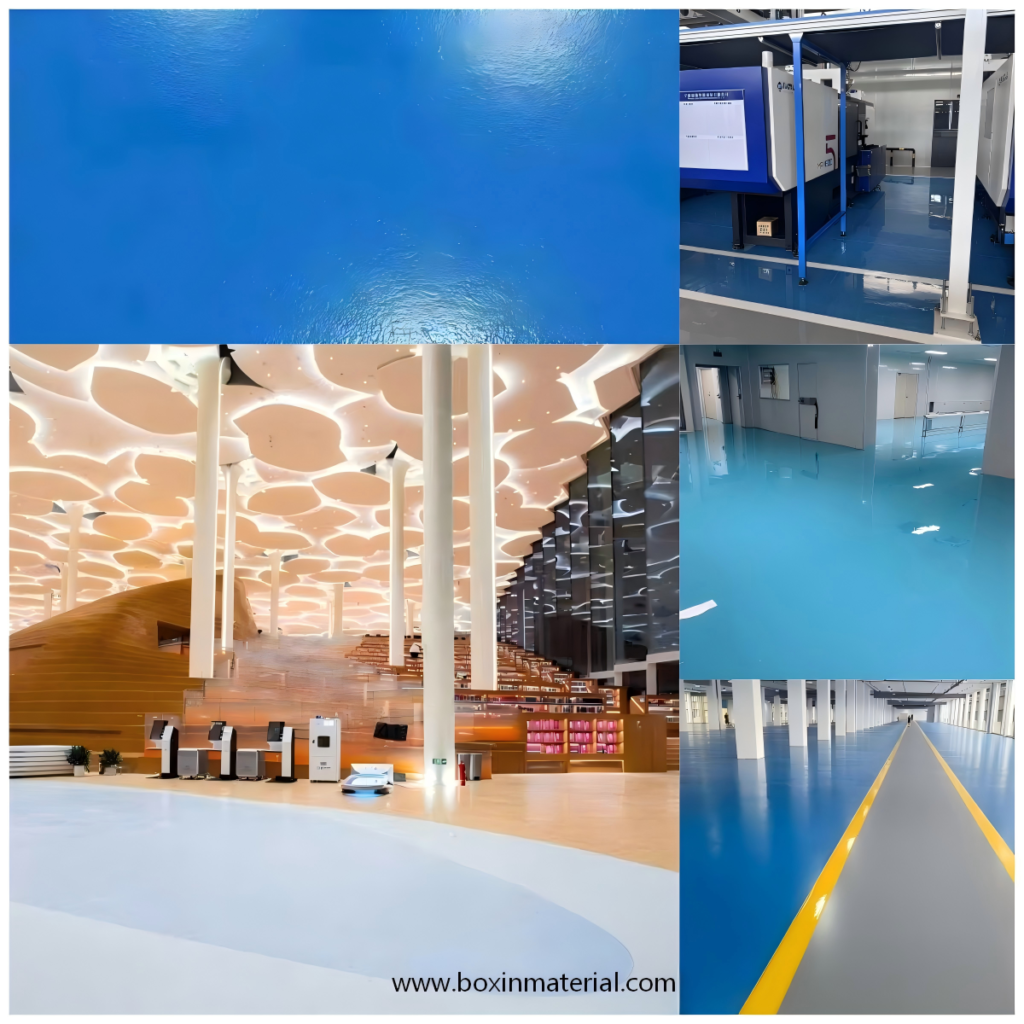
Understanding Different Types of Epoxy Flooring by Application
To meet diverse industrial requirements, epoxy floor coatings are categorized into several functional systems:
- Epoxy Thin-Coating: The go-to solution for standard industrial warehouses and dust-free production lines.
- Epoxy Self-Leveling: Engineered for areas requiring ultra-high cleanliness and a seamless, mirror-like finish.
- Anti-Static Epoxy: Essential for the electronics industry to prevent electrostatic discharge (ESD) interference.
- Wear-Resistant Mortar: Reinforced for extreme heavy-duty environments, such as forklift zones and heavy equipment storage.
Material Science: Waterborne vs. Solvent-Based Epoxy
Choosing the right carrier is a critical decision in the manufacturing process:
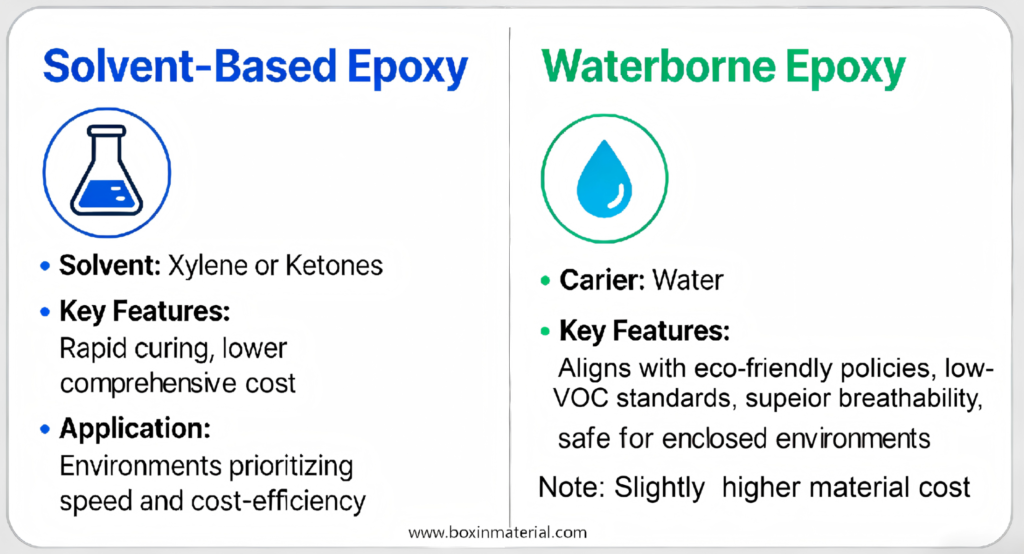
- Solvent-Based Epoxy : Utilizing Xylene or Ketones, this system is known for its rapid curing and lower comprehensive cost. It remains a staple in environments where speed and cost-efficiency are prioritized.
- Waterborne Epoxy : Utilizing water as the carrier, this system aligns with global eco-friendly policies and low-VOC standards. While the material cost is slightly higher, it offers superior breathability and safety for enclosed environments.
The Professional 5-Layer Installation Standards
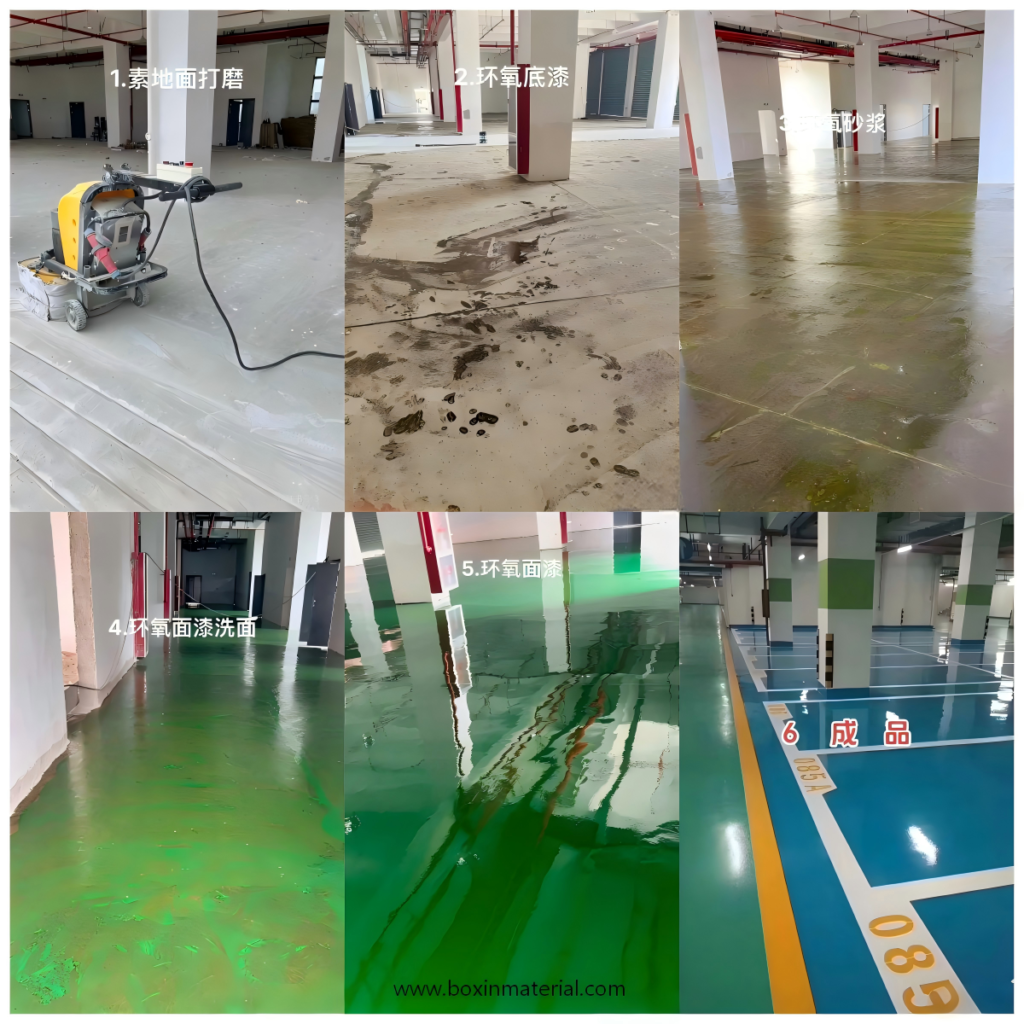
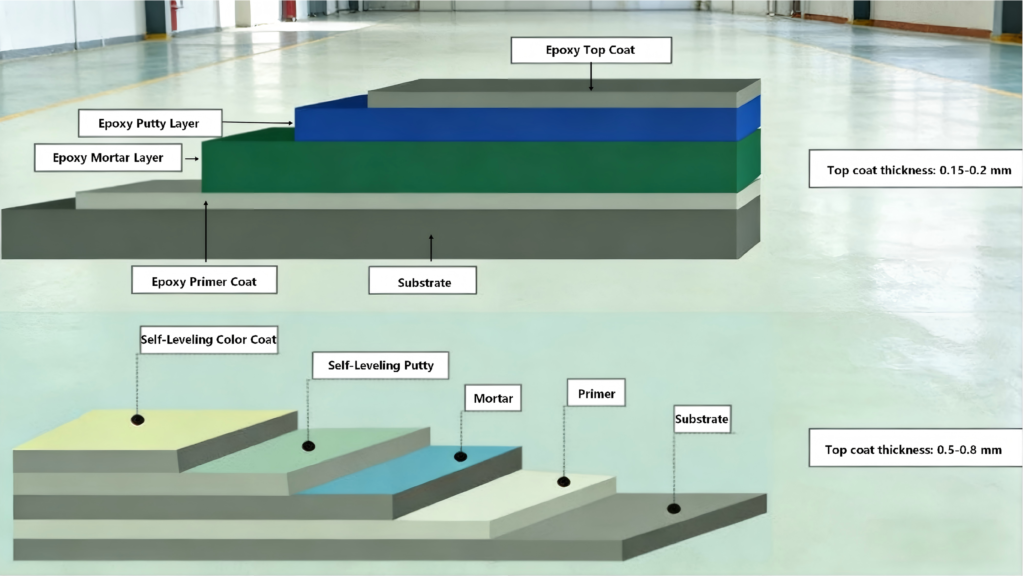
To ensure the integrity of the epoxy resin floor, we recommend a rigorous 5-layer application system:
- Substrate Preparation: Removing all surface contaminants and protrusions to ensure mechanical bonding.
- Primer Layer: Applied at 16°C+, the primer penetrates the concrete pores. Hardening time: 6 hours.
- Mortar Mid-coat: Mixed with graded quartz sand for thickness and impact resistance. Hardening time: 12 hours
- Putty Layer: Mixed with calcium powder for final leveling and sealing micro-pores. Hardening time: 8 hours.
- Finishing Topcoat: A 1.5-5mm thickness is maintained for the final shield. Hardening takes 48 hours for foot traffic and 72 hours for full heavy-duty usage.
FAQ: Troubleshooting Factory Production
Curing is a temperature-dependent chemical reaction. Waterborne epoxy typically requires 12-18 hours per layer to ensure water evaporation doesn’t compromise the film’s density.
Bubbling is often caused by residual moisture in the concrete or trapped air during the mixing of the two components. Proper grinding and a high-quality primer seal are the best preventions.
One-Stop Formula Development Service
We provide a complete supply of raw materials and customized technical guidance for the production of epoxy floor coatings to help factories achieve professional results.
- customized formula based on your requirements
- raw material supply
- production process guidance
- 100% implementation support until your product is stable