
High-Performance Elastic Texture Paint: The Solution for Cracked Walls
Elastic texture paint is a specialized coating designed to bridge and cover wall cracks, preventing fissures from reappearing due to building shifts. This high-performance texture wall coating offers exceptional durability, including strong water and stain resistance, making it ideal for direct application on both traditional masonry and tile surfaces.
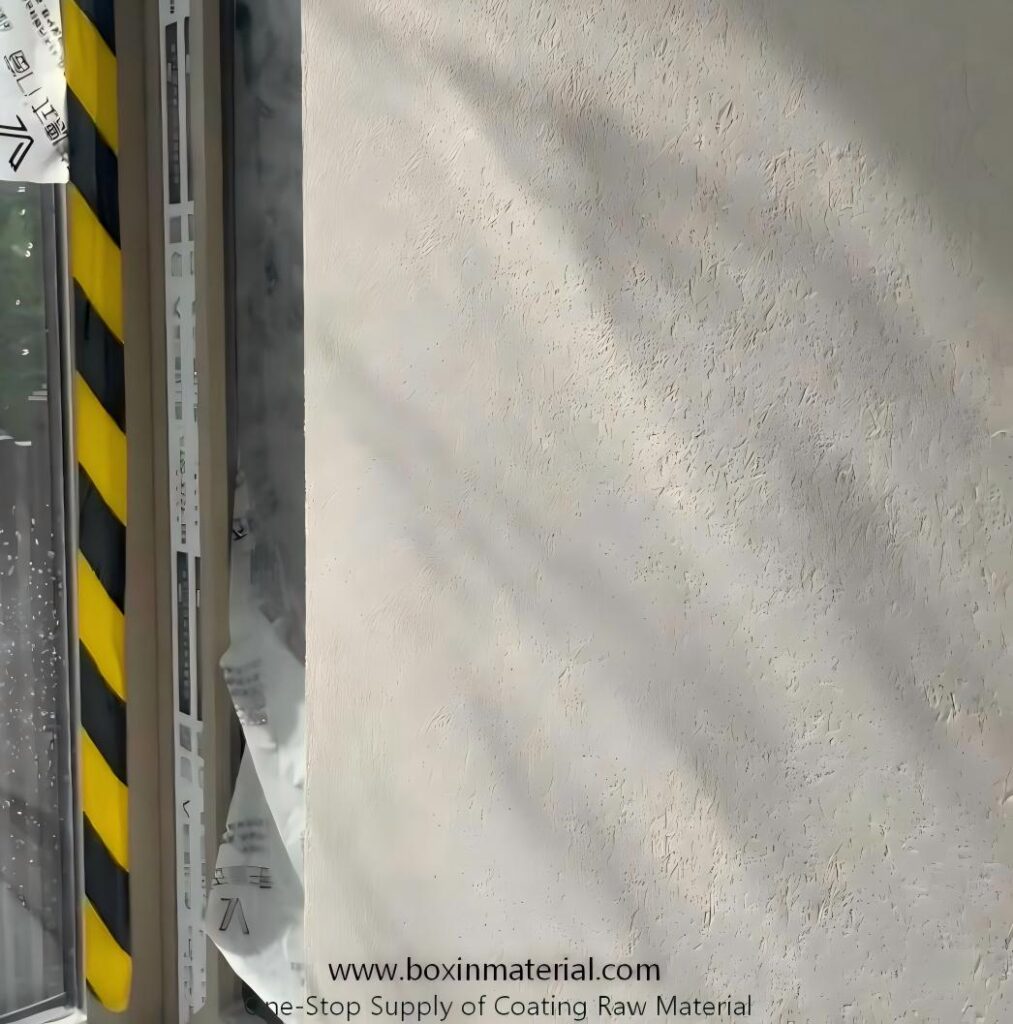
Exclusive Elastic Texture Paint Formulation (Technical Reference)
A successful elastic texture paint formulation relies on the high elongation properties of the binder and the specific particle size distribution of the fillers. Below is a professional-grade technical framework:
| No. | Material | Model | Dosage(g) |
| 1 | Water | —- | 177.5 |
| 2 | Dispersant | 104 | 5 |
| 3 | Wetting Agent | 599 | 1 |
| 4 | Defoamer | 721 | 1.5 |
| 5 | Cellulose | 250HBR | 5 |
| 6 | pH Adjuster | AMP-95 | 1 |
| 7 | Bactericide | M-3 | 5 |
| 8 | Titanium Dioxide | R-996 | 100 |
| 9 | Ground Calcium Carbonate (GCC) | CC800 | 300 |
| 10 | Mica Powder | 1250mesh | 25 |
| 11 | Bentonite | — | 4 |
| 12 | Emulsion | 8199 | 350 |
| 13 | Antifreeze | Ethylene Glycol | 1.5 |
| 14 | Antiespumante | 721 | 1.5 |
| 15 | Antifungal Agent | M-9 | 2 |
| 16 | Thickener | 993 | 3 |
| 17 | Water | — | 20 |
| 18 | Total | 1000 |
Elastic Textured Paint Production Process
- Add materials 1–5 in sequence, disperse for 10 minutes until cellulose fully dissolves into a transparent gel with no particles.
- Add No. 6–7 and disperse for 1 minute.
- Add materials 8–12 in sequence and disperse at high speed for 30 minutes until fineness < 50 μm.
- Add materials 13–17 in sequence, disperse 10 minutes, cool the paint, then filter and package.
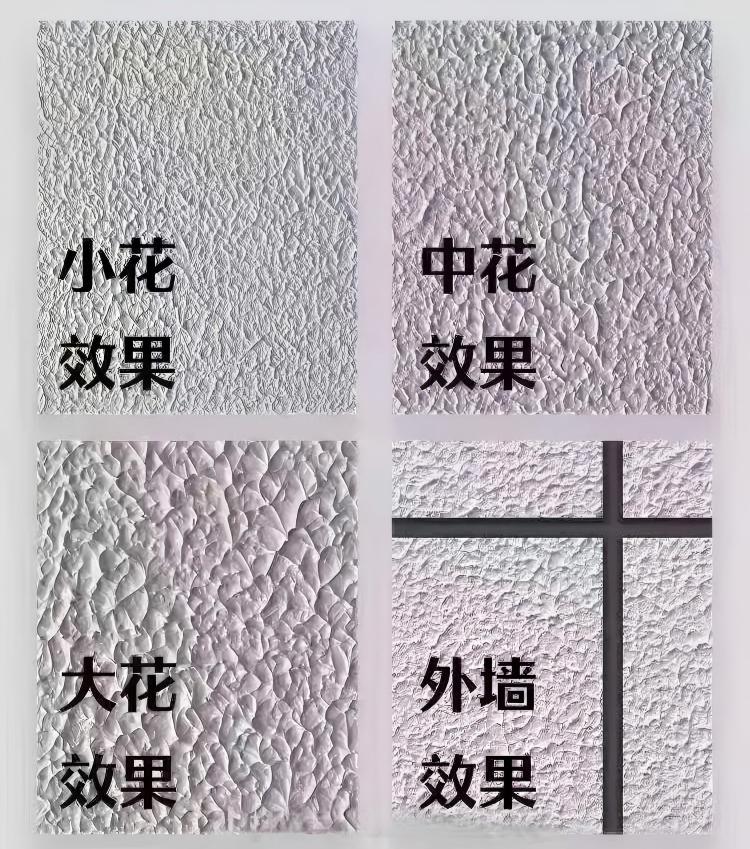
Finishing Effects: From “Small Flower” to “Large Flower” Patterns
Depending on the specific application techniques and tool selection, the final appearance of elastic texture paint can vary significantly. The effects are generally categorized based on the size and density of the texture:
- Small Flower (Fine Texture): Achieved through fine-pored rollers, creating a subtle, dense pattern for a modern, refined look.
- Medium Flower (Standard Texture): The most common effect, providing a balanced, stereoscopic appearance similar to an orange peel.
- Large Flower (Bold Texture): Created using coarse-pored rollers and thicker application layers, resulting in a dramatic, high-relief three-dimensional effect.
Professional Application Guide for Elastic Coatings
To ensure the maximum effectiveness of your crack-resistant paint, follow this rigorous 5-step process:
- Sealer Primer: Apply to ensure strong adhesion and seal the substrate’s water absorption.
- Base Layer: Apply high-quality primer to repair minor defects and ensure uniform thickness.
- Texture Application: Roll on a thin layer in a consistent direction and use specialized tools to “pull” the paint into the desired “flower” pattern.
- Multi-layer Finishing: If needed, apply additional layers after the previous coat is dry.
- Inspection and Repair: Regularly check for consistency and rectify any issues immediately.
FAQ: Troubleshooting and Benefits
Yes, our elastic texture paint formulation is designed with high adhesion, allowing it to bond securely with non-porous surfaces like tiles when used with the correct primer.
The coating has high elongation, meaning it stretches as the wall underneath moves or cracks, acting as a flexible bridge that hides the break.
One-Stop Formula Development Service
We provide full raw material supply and customized technical guidance for emulsion paint production to help factories achieve professional results.
- customized formula based on your requirements
- raw material supply
- production process guidance
- 100% implementation support until your product is stable