
Low temperatures in winter pose a severe challenge to waterborne coatings; anti-freezing is crucial for stable storage and application. This article compares two main anti-freeze strategies: adding antifreeze agents (like Ethylene Glycol) and using low-boiling point co-solvents. We analyze their impact on drying time, water resistance, and VOC to help small-to-medium paint manufacturers and purchasers make the best performance-cost trade-off.
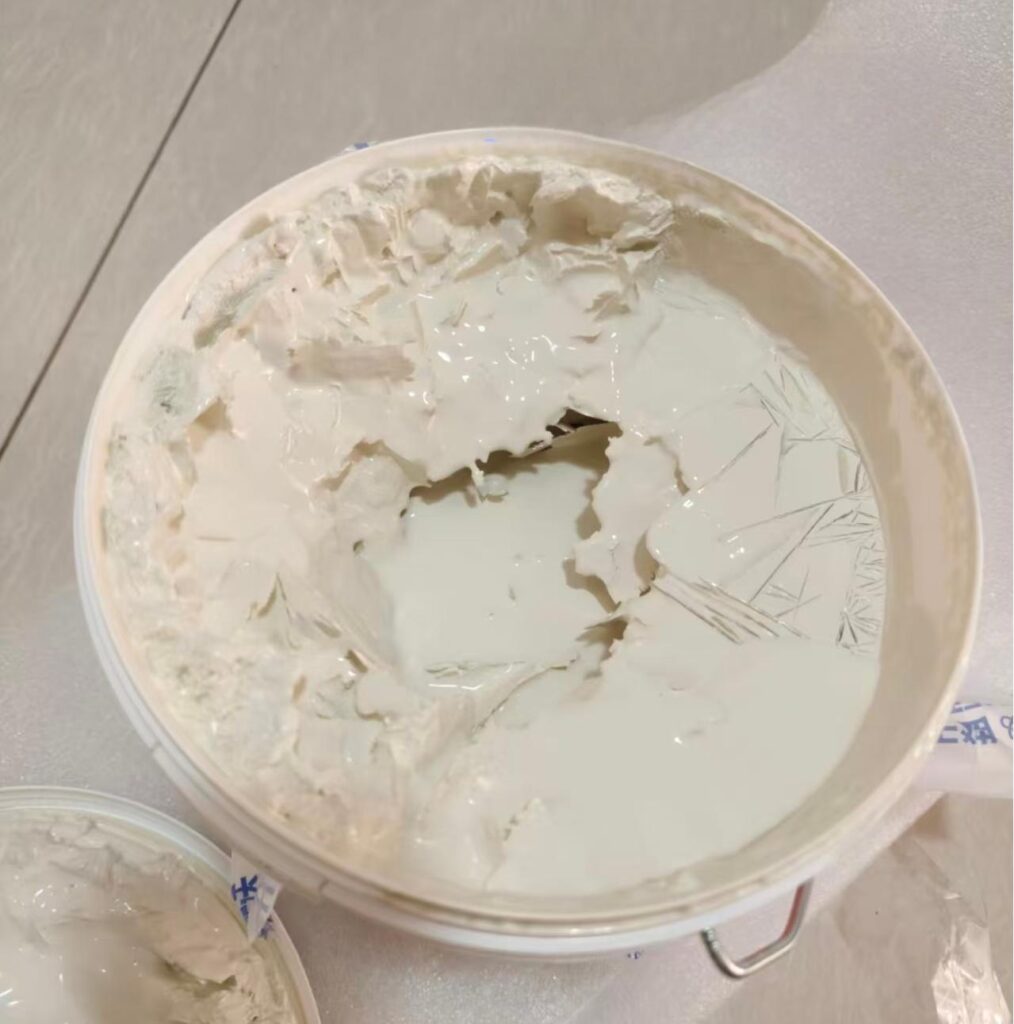
Why Does Water-Based Paint Freeze?
Water-based paint contains a large amount of water (freezing point: 0°C).
Once the temperature drops below 0°C:
- ice crystals form
- viscosity increases sharply
- emulsion particles break (coagulation)
- after thawing → separation, gel, lumps
- coating becomes unusable
Method 1: Adding Antifreeze (Ethylene Glycol) – Most Common and Direct Solution
Ethylene Glycol (EG) is a key component in automotive antifreeze. Due to its significant freezing point depression effect and low cost, it is widely used as an Antifreeze Stabilizer in waterborne coatings.
Advantage:
- It ensures the waterborne coating does not freeze and destabilize the emulsion below 0 ℃, guaranteeing product storage stability.
- It helps control the manufacturing cost of the paint.
Shortcoming:
The addition of EG introduces two core problems that purchasers and applicators must confront.
- Significantly Prolonged Drying Time: The drying of waterborne paint relies on water evaporation. EG has a high boiling point, close to 200℃, much higher than water. Its presence severely hinders water evaporation, slowing down the drying speed. Slow drying increases the risk of application failure; if exposed to dew or rain before fully cured, the wet paint film can be washed off.
- Significantly Reduced Water Resistance: Antifreeze agents are highly hydrophilic and miscible with water. Residual EG in the dried film readily absorbs water. This severely reduces the paint’s water resistance, leading to defects like blistering after the film dries, compromising long-term protection.
Method 2: Using Low-Boiling Solvents – Improve Drying, Reduce Freezing Risk
To overcome the slow drying issue of traditional antifreezes, an alternative strategy is to use low-boiling point organic solvents as co-solvents.
Advantage:
- Significantly Shorten Tack-Free Time: The addition of low-boiling solvents can significantly shorten the tack-free time, speeding up the application process.
Challenges:
- May cause surface defects (requires leveling agent)
- High VOC
- Potential cracking due to fast evaporation
One-Stop Formula Development Service
If you are a coating or ink factory and want to produce coating,
we can provide:
- customized formula based on your requirements
- raw material supply
- production process guidance
- 100% implementation support until your product is stable
Helping your project run smoothly and reduce production risk.